15%
pooled prevalence of body dysmorphic disorder in plastic surgery patients, and 12.65% in dermatology patients.
Ribeiro, Aesthetic Plast Surg 2017. Systematic review and meta-analysis of 33 publications.A practitioner's guide for aesthetic injectors
The aesthetic medicine consultation, taught as clinical care. A 60-minute framework that takes you from "what would you like done today" to a history, an examination, a diagnosis and a shared plan.
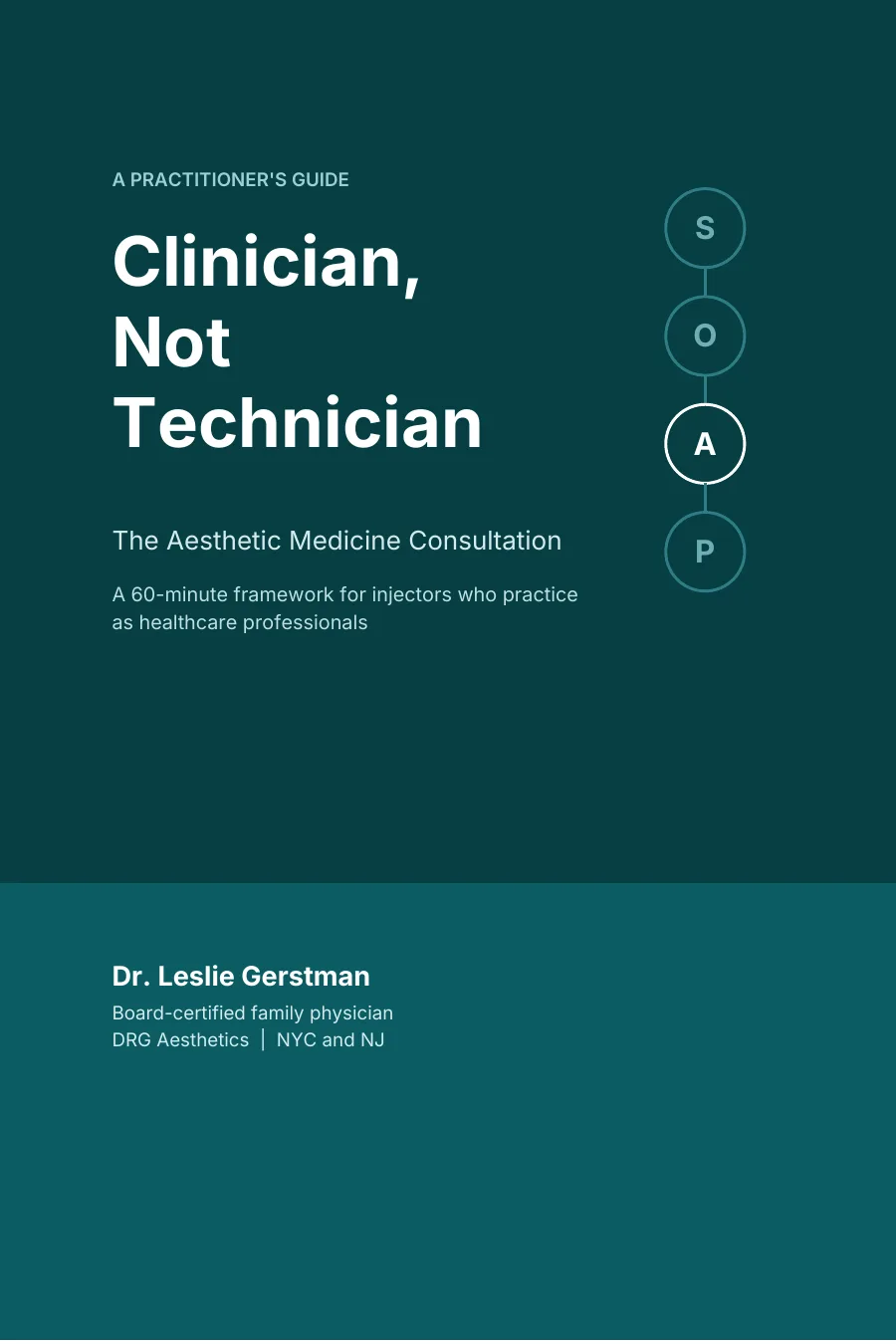
That question turns a clinician into a technician. The patient arrives with a treatment already chosen, the appointment slot is short, and the consult becomes paperwork before the needle.
This book teaches injectors to run the aesthetic visit the way medicine runs every other visit: listen first, take a history, examine, name the problem, then decide together. Sometimes the right plan is a different treatment. Sometimes it is no treatment at all.
15%
pooled prevalence of body dysmorphic disorder in plastic surgery patients, and 12.65% in dermatology patients.
Ribeiro, Aesthetic Plast Surg 2017. Systematic review and meta-analysis of 33 publications.2.3%
of cosmetic treatments received by people with BDD improved overall BDD severity.
Crerand et al., Ann Plast Surg 2010. Study of 200 people with BDD.18.3 vs 15.0
minutes per visit for primary care physicians with no malpractice claims compared with those with claims. They also oriented patients more and checked understanding more often.
Levinson et al., JAMA 1997. Audiotapes of 10 visits each for 124 physicians.645
physicians followed for 2,546 physician-years. Unsolicited patient complaints were linked to risk-management files and lawsuits.
Hickson et al., JAMA 2002. Retrospective cohort.No trial has tested whether longer aesthetic consultations reduce complications. The book says so plainly, and builds its case on screening, communication and safety research instead.
The technician trap, and what research on the clinical conversation shows about complaints, claims and outcomes.
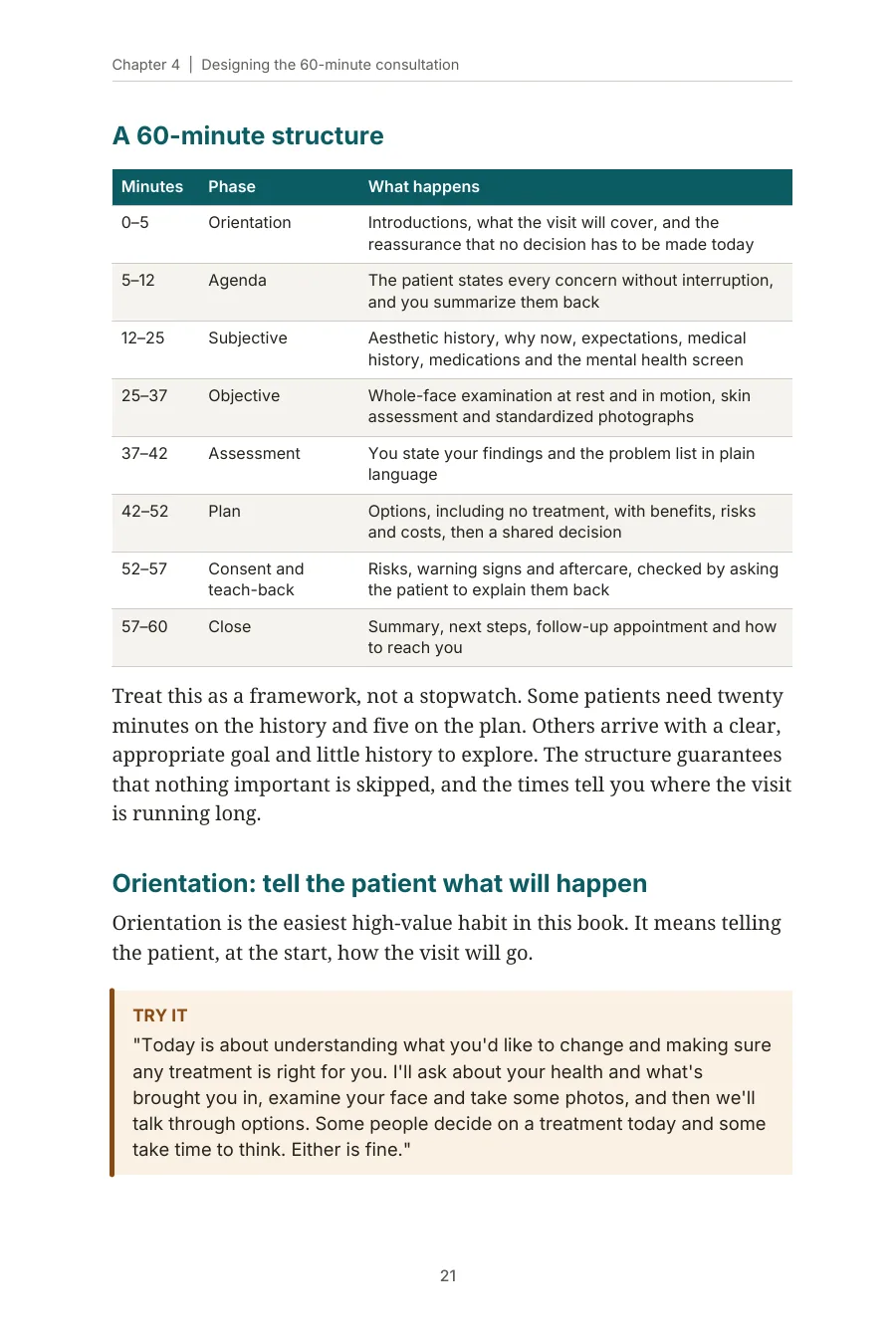
Intake forms that work, and how to design a 60-minute consultation minute by minute.
Agenda setting, aesthetic and medical history, BDD and expectations screening, whole-face examination, the problem list, shared decision-making, consent and teach-back.
How to say no, and how to handle emotion, money and disappointment without losing the patient's trust.
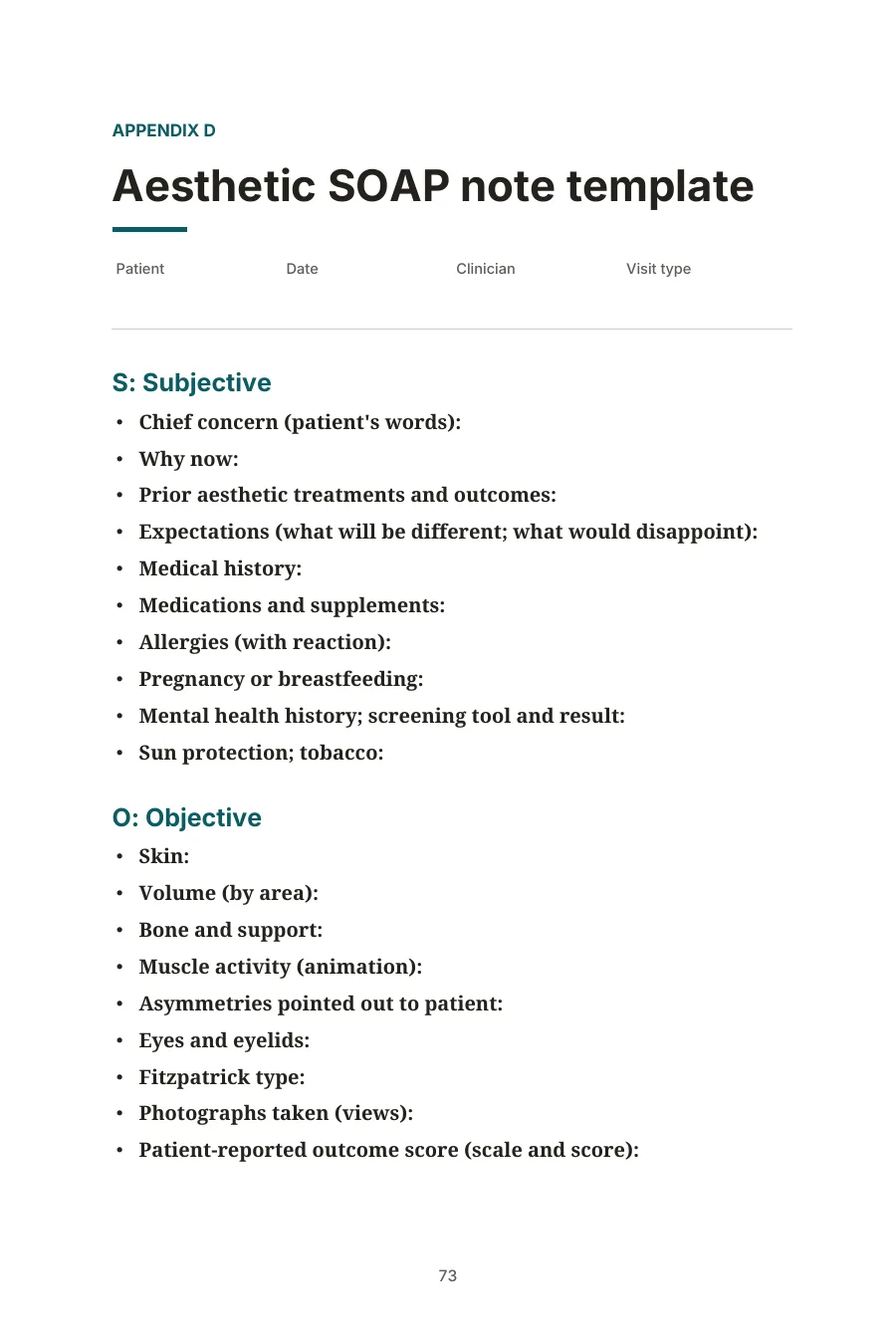
SOAP charting, follow-up and outcome tracking, and building a consult-first practice.
$99
One practitioner. The full PDF and all printable appendices.
Buy nowFor practices
$249
Up to 5 staff in one practice. Use it to train new injectors and standardize consults.
Buy nowSecure checkout by Stripe. Your download opens right after payment, and Stripe emails your receipt.
Checkout opens soon.
No. It is educational content for licensed practitioners and does not award CME credit.
The book makes the case for an hour based on the tasks a full consult requires, not on a trial. It treats the structure as a framework, not a stopwatch: what matters is that every step gets done well.
No. The consent and charting chapters describe good clinical practice. Check your state's rules and your malpractice carrier's requirements.
A 6 x 9 in PDF that reads well on a tablet or laptop, with appendices you can print for your office.
The Individual license is for one practitioner. The Practice license covers up to 5 staff in one practice.